Glycogen degradation requires the following two reactions:
Removal of glucose forms the non-reducing ends of glycogen. Using inorganic phosphate (Pi), glycogen phosphorylase cleaves the (1,4) linkages on the outer branches of glycogen to yield glucose-1-phosphate. Glycogen phosphorylase stops when it comes within four glucose residues of a branch point. A glycogen molecule that has been degraded to its branch points is called a limit dextrin.
Hydrolysis of the α-1,6- glycosidic bonds at the branch points of glycogen. Amylo α-1,6-glucosidase, also called debranching enzyme, begins the removal of α(1,6) branch points by transferring the outer three of the four glucose residues attached to the branch point to a nearby non-reducing end as shown in Figure 8.14. It then removes the single glucose residue attached at each branch point. The product of this latter reaction is free glucose.
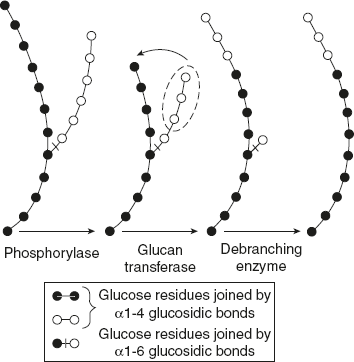
Figure 8.14 Steps Involved in Glycogenolysis
Leave a Reply