Linderstrom-Lang first defined the four basic structural levels of organisation, which are referred to as primary, secondary, tertiary, and quaternary. Three of these structural levels (primary, secondary, and tertiary) can exist in molecules composed of a single polypeptide chain, whereas the fourth (quaternary) involves interactions of polypeptide within a multi-chained protein molecule.
The basic structure of a protein consists of one or more linear chains of amino acid units. This linear structure forms a helical shape to produce the secondary structure. The helical structure folds in several patterns to produce the three-dimensional structure or tertiary structure. Finally, certain proteins are made up of subunits of similar or dissimilar types of the polypeptide chains. These subunits interact with each other to give rise to the so-called quaternary structure of protein as shown in Figure 3.3.
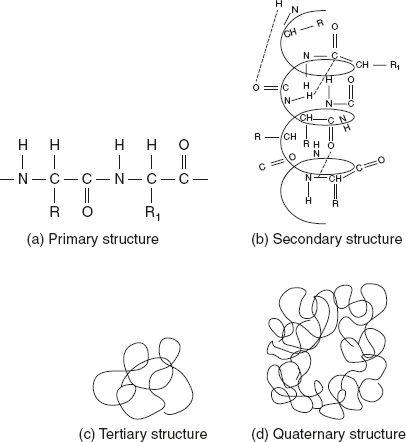
Figure 3.3 Structure of Primary, Secondary, Tertiary and Quaternary Structure of Protein
Leave a Reply