Purine and their nucleosides may be converted directly to mononucleotides by salvage reactions.
Conversion of purines and deoxyribonucleotides to mononucleotides is carried out by the so-called salvage pathway, which requires far less energy than the de novo synthesis. The most important step of the salvage pathway is phosphoribosylation by PRPP of a free purine to form a purine 5′-mononucleotide (Pu-RP).
Pu + PP − RP  PPi + Pu − RP
Adenine phosphoribosyltransferase catalyses the formation of AMP from adenine. Hypoxanthine-guanine phosphoribosyltransferase (HGPRT) converts guanine and hypoxanthine, respectively to GMP is IMP. Phosphoribosyl pyrophosphate (PRPP) is the salvage pathway. A second salvage mechanism involves phosphoryl transfer from ATP to a purine ribonucleoside (PuR).
PuR + ATP ADP + PuR − P
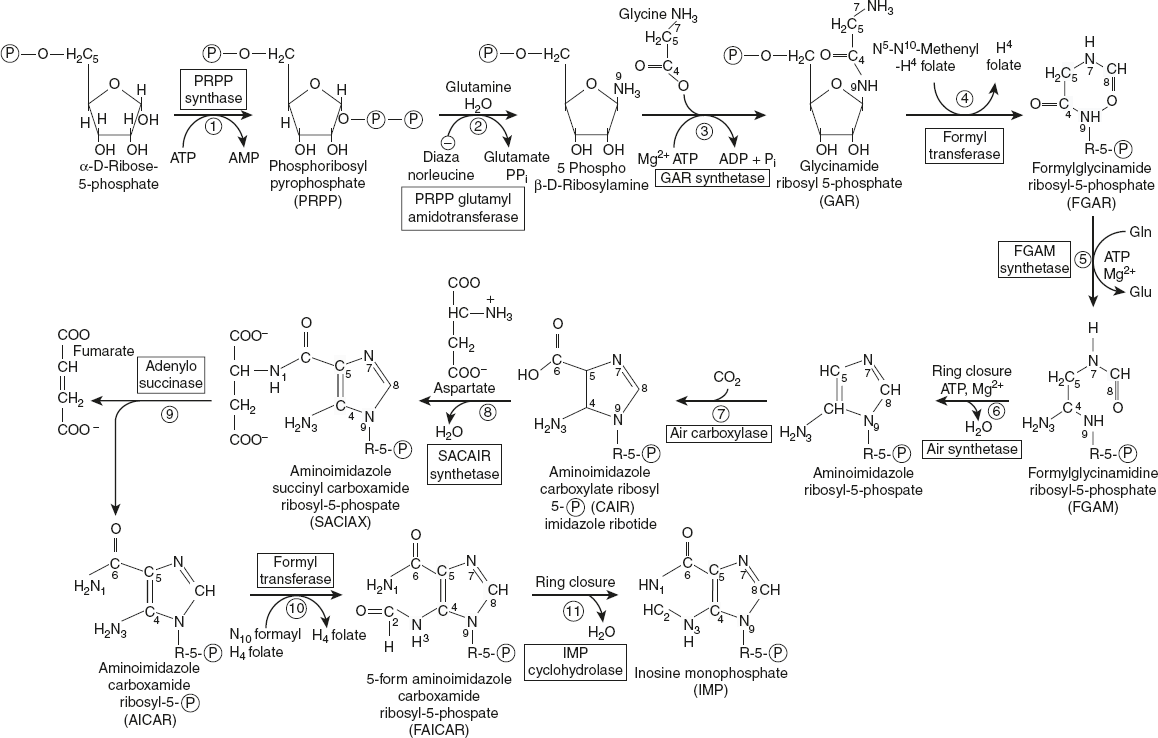
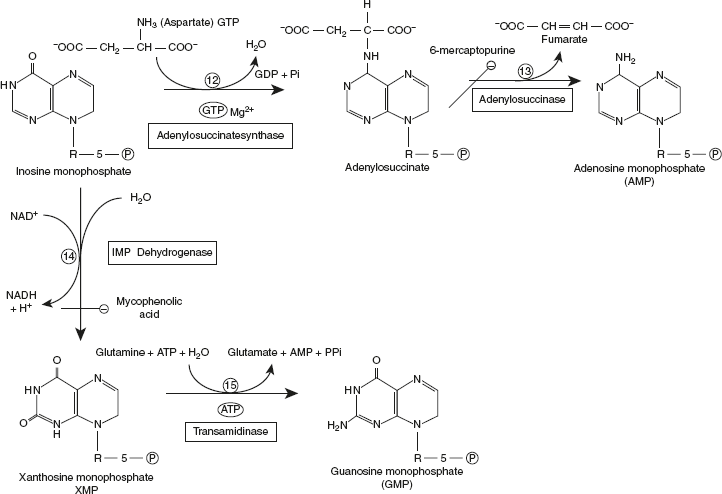
Figure 11.2 Synthesis of Purine Nucleotides
Adenosine kinase catalyses phosphorylation of adenosine and deoxyadenosine to AMP and dAMP, while deoxycytidine kinase phosphorylates deoxycytidine, deoxyadenosine, and 2′-deoxyguanosine to dCMP, dAMP, and dGMP, respectively. Salvage pathway is described in Figure 11.3.
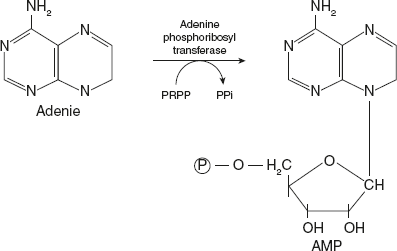
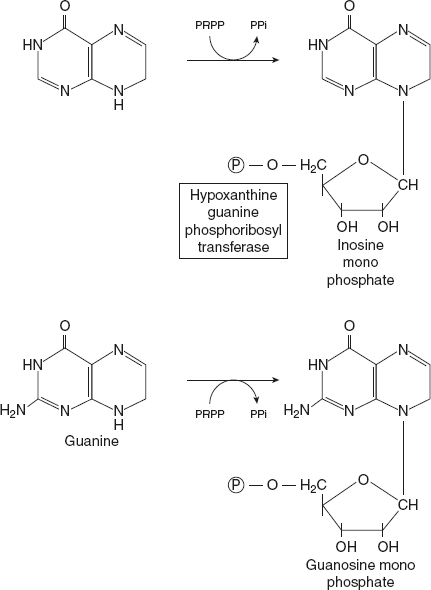
Figure 11.3 Salvage Pathway for Purine Nucleotides Synthesis
Leave a Reply