The end product of purine metabolism in human is uric acid. The sequence of reactions in purine nucleotides degradation is given below:
- The nucleotide monophosphates (AMP, IMP, and GMP) are converted to their respective nucleoside forms, adenosine inosine and guanosine by the action of nucleotidase.
- The amino group either from AMP or adenosine can be removed to produce IMP or inosine, respectively.
- Inosine and guanosine are respectively converted to hypoxanthine and xanthine (purine bases) by purine nucleoside phosphorylase. Adenosine is not degraded by this enzyme; hence, it has to be converted to inosine.
- Guanine undergoes deamination by guanase to form xanthine.
- Xanthine oxidase is an important enzyme that converts hypoxanthine to xanthine to uric acid. This enzyme contains fad, molybdenum, and iron, and is exclusively found in liver and small intestine. Xanthine oxidase liberates H2O2, which is harmful to the tissues. Catalase cleaves H2O2 to H2O and O2.
- Uric acid is the final excretory product of purine metabolism in humans as described in Figure 11.6. Uric acid can serve as an important antioxidant by getting itself converted to allantoin. It is believed that the antioxidant role of ascorbic acid in primates is replaced by uric acid since their animals have lost their ability to synthesis ascorbic acid.
- Most animals (other than primates), however, oxidise uric acid by the enzyme uricase to allantoin, where the purine ring is cleaved.
- Allantoin is then converted to allantoic acid and excreted in some fishes. Further degradation of allantoic acid may occur to produce urea in amphibians (most fishes and molluscs)and alter to ammonia (in marine vertebrates).
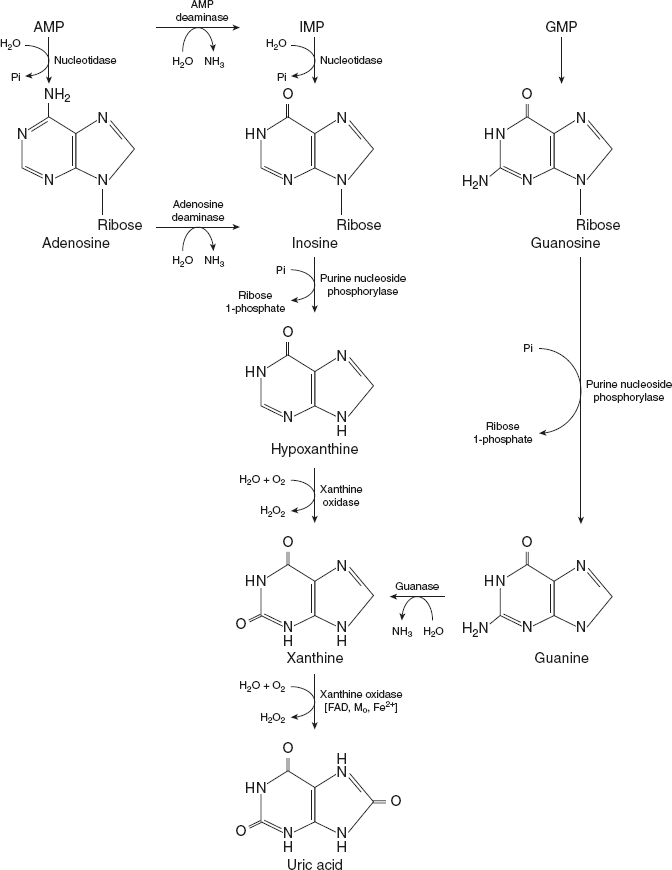
Figure 11.6 Degradation of Purine Nucleotides
Leave a Reply