The pH value or the hydrogen ion concentration of the medium (buffers) controls the activity of an enzyme to a great extent. This is mainly related to the degree of dissociation, the electric charge of enzyme, and through this, the formation of enzyme substrate complex. Each enzyme acts best in a certain pH, which is optimum to it. The approximate optimum pH value for most enzymes is nearly neutral. This value depends on the following:
- Nature of buffer system
- Age of cell tissues
- Nature of substrate
Table 6.3 is an example to validate this fact.
Table 6.3 Enzyme with its Optimum pH
| Enzyme | Optimum pH | Nature of the medium |
|---|---|---|
| Pepsin | 1.5–1.6 | Acidic |
| Lipase (pancreas) | 8 | Basic |
| Lipase (stomach) | 4–5 | Acidic |
| Catalase | 7 | Neutral |
| Urease | 7 | Neutral |
| Trypsin | 7.8–8.7 | Basic |
| Arginase | 10 | Basic |
Maximum enzyme activity is obtained at or near the isoelectric point (pl) of enzyme. The effect of pH on enzyme action is given in Figure 6.5.
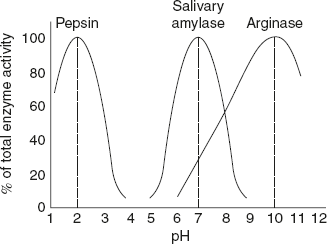
Figure 6.5 Effect of pH on Enzyme Action
Leave a Reply