As the substrate molecules are comparatively much smaller than the enzyme molecules, there should be some specific regions or sites on the enzyme for binding with substrate. Such sites of attachment are variously called active sites or catalytic sites or substrate sites. Active site of an enzyme as shown in Figure 6.6.
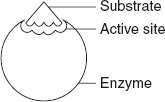
Figure 6.6 Diagrammatic Representation of Active Site
The active site or (active centre) of an enzyme is defined as the small region at which the substrate(s) binds and participates in catalysis. The salient features of active site are given below:
- The active site takes up relatively small part of total volume of an enzyme.
- The active site is a three-dimensional entity.
- The active site of an enzyme is not a point or a line or even a plane. It is an intricate three dimensional form made up of groups that come from different parts of linear amino acid sequences.Example: Lysozyme. The important groups in the active sites are numbered 35, 52, 59, 62, 63, and 101 in the linear sequence of amino acids as shown in Figure 6.7.
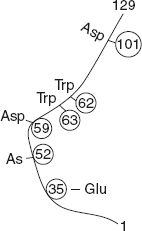 Figure 6.7 Diagrammatic Representation of Active Site of Enzyme Lysozyme
 - Substrates are bound to enzymes by relatively weak forces.
- Active sites are clefts or crevices from which water is largely excluded. It contains several polar residues that are essential for binding and catalysis. The non-polar character of cleft enhances the binding of substrate.
- Polar residues are aspartic acid, glutamic acid, lysine, serine, and so on.
- The specificity of binding depends on the precisely defined arrangement of atoms in an active site.
- Active site changes its configuration in order to bind a substrate which is only slightly different in structure from its own substrate.
Leave a Reply