When ATP donates a phosphate group, it is converted to a group with low energy, forming phosphoric esters of alcohols. This reaction is catalysed by kinases. Among them is hexokinase, which catalyses the transfer of phosphate group from ATP to D-glucose. This reaction is proceeded by an orthophosphate cleavage of ATP, in which, ATP loses a single orthophosphate group as shown in Figure 7.2.
D-glucose + Adenosine ~P~P~P  D-glucose 6-phosphate + Adenosine ~P~P
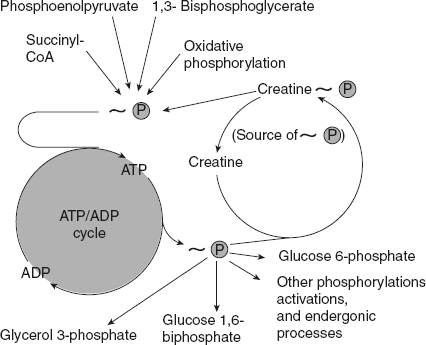
Figure 7.2 Role of ATP/ADP Cycle in the Transfer of High-energy Phosphate
An important feature is that all super high-energy phosphate compounds must pass their phosphate groups via ATP to various acceptor molecules to form their low-energy phosphate derivatives.
Leave a Reply