Before 1900 most drugs in orthodox medicine too were plant-derived pure chemicals as against unprocessed plant-based formulations and preparations in other traditional medical streams. Pharmacists dominated the investigation of botanical drugs during the 1700s and 1800s. Interested physicians, pharmacists documented the sources of different plant drugs, making considerable contribution to the nascent science of botany. Combining this proficiency with their skills in manipulative chemistry they continued their search for drugs from medicinal plants.
Despite the successful isolation of several therapeutically useful molecules from plants, there was a setback in the study of plant-derived drugs especially towards the mid-1900s against the backdrop of the following:
- The search was for pure, crystalline chemicals that could be measured accurately and identified chemically. Search, separation, characterization and identification of scores of chemicals contained in plant drugs were both laborious and uneconomical.
- Advances in synthetic chemistry enabled cost-effective total synthesis of several plant-derived drugs like caffeine, theophylline, theobromine, ephedrine, pseudo-ephedrine, emetine, papaverine, levodopa, salicylic acid and tetrahydrocannabinol.
- Several classic plant-derived drugs lost much ground to synthetic competitors. For example, emetine lost its position as an amoebicidal to metronidazole and related nitroimidazoles, and the use of theophylline as a bronchodilator has declined considerably since the arrival of long-acting β2-adrenergic agonists.
- Antibiotics represented the greatest single contribution of modern drug therapy. Their successful large-scale production resulted in the effective control of several human microbial pathogens that had previously caused incapacitation or death.
- New classes of therapeutic agents, such as corticosteroids, tranquillizers, antidepressants, anti-hypertensives, radioactive isotopes and oral contraceptives were introduced.
- Successful eradication of diseases like small pox through immunization, generation of therapeutic proteins such as human insulin, human growth hormone via genetic manipulation of microbes.
- Generation of several pharmaceutical microbial products such as dextrans, organic acids, vitamins, amino acids, therapeutic enzymes like streptokinase, etc.
- Impressive advances in imaging and other diagnostic equipment including analytical and spectroscopic instrumentation aided quicker disease diagnosis.
The pharmacy which served as an outpost for the relief of suffering and the treatment of minor ailments came to hold preventatives and cures for serious disease. Interest in studying indigenous medicine as a source of new drugs thus waned on account of the availability of several feasible alternatives for the generation of the needed drugs or so it appeared!
There has however been an unexpected turnaround. Traditional systems of medicine have become a topic of global importance during the last two decades and the use of traditional medicine has gained popularity. It has not only continued to be used for primary health care of the poor in developing countries, but has also been used in countries where conventional medicine is predominant in the national health care system. Although conventional medicine (CM) is available in these countries, phytomedicines have often maintained popularity for historical and cultural reasons. Concurrently people in developed countries have also begun to turn to alternative therapies including herbal drugs. In these countries popular use of herbal drugs is fuelled by concerns about adverse effects of chemical drugs, questioning of approaches and assumptions of allopathic medicine and greater public access to health information. Today many reasons are given for the resurgence of holistic traditional medicine (Figure 1.1):
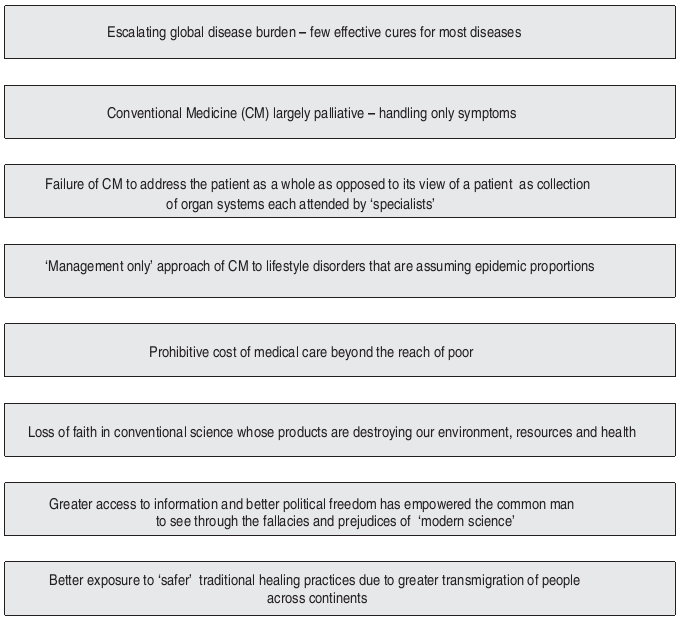
Figure 1.1 Resurgence of interest in traditional drugs—possible reasons
- Loss of faith in conventional science as its products have led to reckless exploitation of the environment, depletion of ozone, drug misuse and iatrogenesis.
- CM has failed to meet continuously rising medical expectations and it seems to have succeeded only in identifying all the major disorders for which there is no easy cure.
- Longer life expectancy has brought with it increased risks of developing chronic debilitating diseases. There is no doubt that CM will probably never fully conquer such old age-related disorders such as bronchitis, arthritis, rheumatism, heart disease, back pain and hypertension. Since these degenerative chronic diseases of old age simply do not respond well even to the most modern treatments, many of these are even considered normal consequences of ageing.
- Aside from the successful ‘treatment’ of infectious diseases, CM is largely palliative attending only to the symptoms. Diseases like diabetes, hypertension, asthma, arthritis, etc. are only ‘managed’ with drugs enabling the patients a better quality of life. There seem not many diseases that can be cured with CM.
- Even with over usage of antibiotics for infections, resurgence of infections with strains that are resistant to many antibiotics is a major challenge to reckon with.
- Rising costs of medical care have neither helped promote efficient use of all the major advancements in medical technology nor have they given better attention to the patient.
- The profit-driven motive of drug designing just to capture a fraction of established markets have led to the addition of more and more ‘me too’ drugs which really do not promise important therapeutic gains.
- Because of lack of patent protection, pharmaceutical companies are not willing to produce certain natural molecules or even drugs meant for a very small population of sufferers such as orphan diseases.
- Fragmentation of medical knowledge with ever-increasing specialties and super specialties does not seem to address the patient as a whole, leave alone his ailment. Instead of being seen as real persons, patients are merely seen as ‘problems’ or interesting ‘cases’ to solve.
- CM’s prime concern is the disease, not in the least its origination, prevention, healing or general overall wellness. Its main focus is disease and human organ systems rather than health and its maintenance.
- Increased trade relations, better transportation, greater economic well-being, better political freedom, better communication and transmigration of people across continents have enabled greater interaction and exposure to the holistic nature of traditional medical practices through contacts with migrants who have carried drugs and success stories along with them.
- Traditional therapies appear to offer gentler means of managing chronic debilitating diseases than CM. Some of the best-known evidence for efficacy of a herbal product besides Artemisia annua for the treatment of malaria concerns the use of Mucuna pruriens for Parkinsonism. Patients express far fewer side effects than when treated with the standard drug levodopa.
A recent survey showed that 78% of patients living with HIV/AIDS in the United States use some form of traditional therapy. Out-of-pocket expenditure for such complementary and alternative medicine is estimated at US$ 2700 million. In Australia, Canada and United Kingdom it is US$ 80, 2400 and 2300 million respectively. Though many of the theories on which alternative therapies are based are not in accord with current medical concepts, many of these therapies have become popular and are in demand by the world populace and these need to be understood by all health practitioners.
It looks like we have reached a state of diminishing returns in CM. There is absolutely no doubt that CM has enabled better health care through the last century. Human life expectancy is greatly enhanced, infantile and maternal mortality at child birth is greatly reduced. CM is best for the management of acute care and definitely one cannot do without the sophisticated instrument-enabled disease diagnosis of today.
However global disease burden is greatly increased due to several factors namely explosive population growth, shedding of traditional dietary habits, massive urbanization, uncontrollable pollution, fast-paced mechanical lifestyle, competitive work ethics, fast-growing consumerism, changing social habits, economy-driven societal needs, etc. While CM is not able to grapple with the skyrocketing proportions of lifestyle-related disorders world over, there are ever-increasing newer diseases, sudden epidemics of infectious viral diseases that seem to strike almost anywhere and everywhere. Overall we seem to be going from one health crisis to another with not many drugs or treatment options to be considered before hundreds of lives are claimed.
Leave a Reply