- Nyaya – the closest Indian equivalent to anaytical philosophy, this darshana gives logical proofs for existence and considers ‘perception, influence, comparison and testimony’ as the only four sources of knowledge.
- Vaiseshika – an empiricist school of atomism, it conceives all objects of the physical universe to be reducible to certain basic atomic units and Brahman is regarded as the fundamental force that causes consciousness in these atoms. This approach accepts only two sources of valid knowledge – ‘perception and inference’.
- Samkhya – a theoretical exposition of human nature, mind and matter analysing the manner of cooperation in a state of bondage.
- Mimamsa – an anti-ascetic and anti-mysticist exposition, it emphasizes unquestionable faith and focus on those aspects of Vedas that focus on spiritual connectivity, acknowledging centred understanding of Vedas much more than traditional ritualism.
- Yoga – the dynamics of the process of disentanglement of bondage of self unto universality.
- Vedanta – the most widely recognized dharshana, reiterates Brahman as the absolute reality and the rest of creation as an illusory power of Brahman. Liberation lies in realizing the oneness of the individual soul with that of the all-pervading Brahman.
Further under the influence of rajoguna from the sattwic aspect of ahamkara develops manas or mind i.e., further evolution. Mahat, Ahamkara and Manas are the inner organs of the human body (Antahkaranas) and are the receptacles of one’s consciousness. Together called ‘Chitta’ they impart direct awareness of self. The ahamkara shapes one’s personality.
From further interplay of the trigunas arise external organs (bahyakaranas) – the five organs of knowledge (Gyanendriyas) – sense organs (nose, tongue, eye, skin and ear) and five organs of action (Karmendriyas) – hands, feet, genitals, anus and tongue.
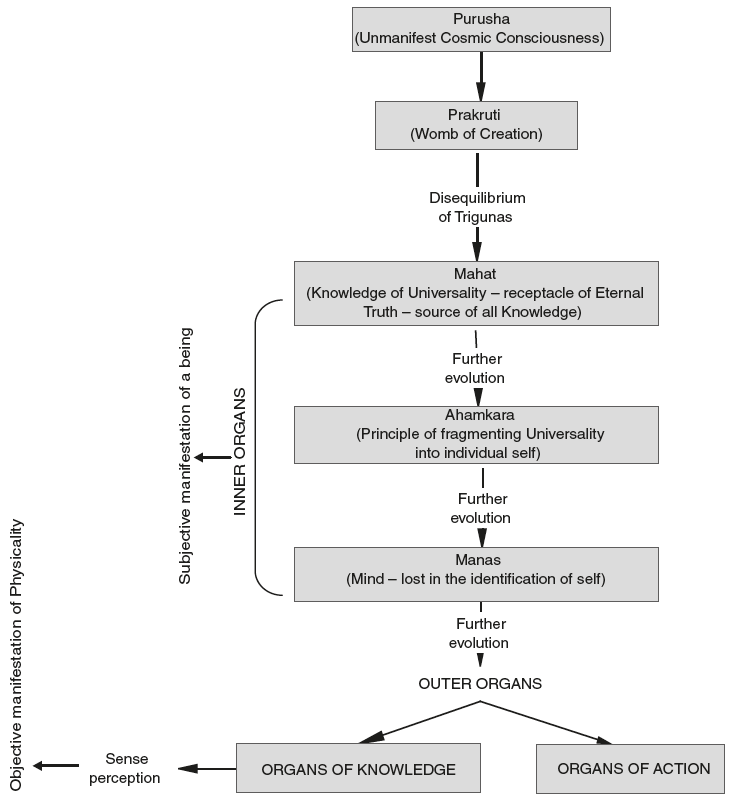
Figure 2.2 The Samkhya basis of existence
Predominance of tamas gravitates ahamkara towards generating the sukshma bhootas or the five subtle elements of perception (tanmatras), i.e., the five senses namely scent (gandha), flavour (rasa), form (rupa), consistency (sparsha) and sound (sabda) representing the essence of human sense perception. While the inner organs and outer organs under the control of sattwa and rajoguna belong to the realm of subjective manifestation of a being, the subtle elements under the control of tamas represent the objective manifestation or perception or physicality (reality).
The state of predominance of any of the three gunas has a formative influence on one’s personality imprinting itself strongly on one’s character. Chitta is the user of the Bahya karanas or outer organs. Manas or mind is the constant that links and coordinates activities between the conscious cortex and the subconscious hypothalamic region from where most outside information is relayed to the cortical region of the brain. According to tradition, the principles of Ayurveda are emanations of an unchanging and eternal truth that reside in mahat.
Leave a Reply