The National Health Policy, 1983 has reiterated the efficacy and cost effectiveness of Indian traditional medicine and recognized the need for ending the long neglect of these systems in our health care strategy. The policy emphasized the need for a meaningful phased integration of ISM with modern medicines and has called for augmentation of budgetary support and extension of fiscal incentives and concessions available to the modern pharmaceutical industry to be made available to the ISM sector. Recognizing the urgency to explore India’s potential advantage and expand India’s share in the world herbal drug market, the Indian government initiated the establishment of several premier organizations (Figure 5.1) all over the country to engage in a plethora of medicinal plant-related promotional activities ranging from fundamental research to identification, cultivation, documentation, training, standardization etc. To this effect it has restructured and expanded existing bodies, instituted newer programmes to enable planned, integrated progress in all areas of health care and human development particularly agriculture and food products, rural development, education, social welfare, tourism, housing, water supply, sanitation etc.
The Planning Commission of India in its ‘Task force on Conservation and Sustainable Use of Medicinal Plants’ had recommended the following action plan among others for the comprehensive development of the medicinal plant sector:
- Establishment of 200 Medicinal Plant Conservation Areas.
- Establishment of 200 ‘Vanaspati Van’ in forest areas for commercial supply of crude drugs to pharmacies and exports to be managed by a registered society.
- About 100 endangered, rare and threatened medicinal plants should be grown in botanical gardens.
- Direction to the three gene banks at Central Institute of Medicinal and Aromatic Plants, Lucknow, National Bureau of Plant Genetic Resources, New Delhi and Tropical Botanical Garden and Research Institute at Trivandrum to store germplasm of all medicinal plants.
- Forest Departments to effectively identify and map areas rich in medicinal plants, manage the harvesting, extraction and transport of medicinal plants from the wild and maintain list of traders, private agents, wholesale dealers and final consumers of medicinal plants to streamline trade activities.
- Identifying non-governmental organizations (NGOs) to aid the government in promoting awareness and availability of seeds and planting material to farmers, encouraging medicinal plant cultivation through organic farming.
- Initiate efforts to ensure quality of herbal drugs through standardization, active molecule identification and overall quality improvement utilizing tools and techniques of biotechnology and genetic engineering.
- Accelerate search for new molecules and their development as new drugs concurrent to their standardization and patenting.
- Formalizing and organizing medicinal plant trade through the establishment of a National Medicinal Plants Board with adequate representation being given to all stakeholders.
- Ensuring appropriate policy, legislation and financial support to the sector towards greening the country, generating employment and enhancing health care standards.
- Cataloguing ancient medical manuscripts to retrieve the wealth of knowledge that is lying scattered in oriental libraries and in private collections. Creation of such a database shall rightfully establish our claim on this knowledge thus protecting our medical wisdom from overseas patenting.
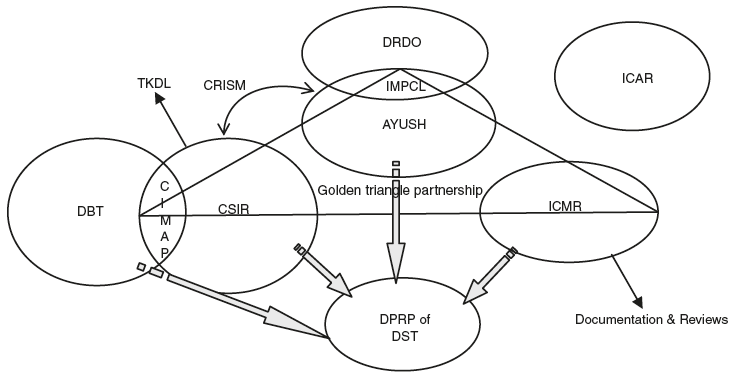
Figure 5.1. Governmental agencies promoting herbal drug sector
As part of efforts towards meeting these goals, the Government of India launched several schemes:
- Extra Mural Research project of AYUSH to enable accreditation of organizations for research and development (R&D) in traditional medical systems;
- Golden triangle partnership (GTP) scheme between AYUSH, CSIR and ICMR;
- National Medicinal Plants Board was set up for coordinating all matters relating to medicinal plants, including drawing up policies and strategies for conservation, proper harvesting, cost effective cultivation, R&D, processing, marketing of raw material in order to protect, sustain and develop this sector;
- AYUSH identified as nodal agency to enable Traditional Knowledge Digital Library for the documentation and digitalization of indigenous knowledge for availability to patent examiners to prevent grant of patents to indigenous knowledge;
- New Millennium Indian Technology Leadership Initiative (NMITLI) launched by CSIR to attain a global leadership position in a ‘team India spirit’ for Indian industry by synergizing the best competencies of publicly funded R&D institutions, academia and private industry;
- Technology Development Board (TDB) provides financial assistance to industrial concerns and other agencies attempting development and commercialization of indigenous technology to wider domestic applications;
- Scheme on home-grown technology of TIFAC of DST basically promotes Indian capabilities for the development of novel products and processes in different areas including the pharma sector and herbal sector;
- Drugs and Pharmaceuticals Research Programme of DST is implemented to synergize the strength of R&D institutions and Indian pharmaceutical industry for discovery and introduction of new drugs;
- National Panel on Bhasmas for identification of thrust areas of R&D in the areas of Bhasmas and Kushtas – much more economical drug delivery systems – and setting up of national facilities for the said purpose.
In addition to the government initiatives, several national and international organizations are actively involved in different parts of India to promote awareness, documentation and conservation strategies for medicinal plants. Several NGOs are working in the areas of conservation and developing cultivation strategies. A brief overview of the agenda and achievements of prime governmental and non-governmental agencies involved in promoting research and utilization of Indian medicinal plants follows.
Leave a Reply