Popularly known as CIMAP, it is a frontier plant research laboratory, originally established as Central Medicinal Plants Organization (CMPO) in 1959. CIMAP is steering multidisciplinary high-quality research in biological and chemical sciences and extending technologies and services to farmers and entrepreneurs of medicinal and aromatic plants (MAPs) with its research headquarters at Lucknow and research centres at Bangalore, Hyderabad, Pantnagar and Purara. CIMAP research centres are aptly located in different agroclimatic zones of the country to facilitate multilocation field trials and research. Fifty years since its inception CSIR today has extended its wings to Malaysia with CSIR-CIMAP having signed two bilateral cooperation agreements between India and Malaysia in research, development and commercialization of MAP-related technologies.
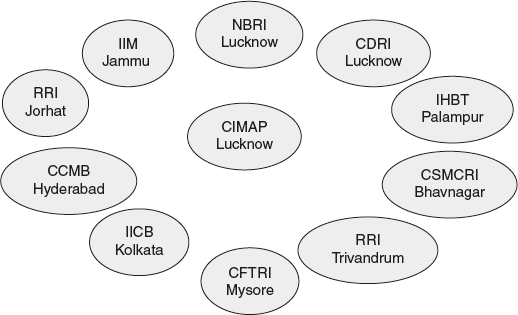
Figure 5.3 CSIR laboratories in herbal drug research
CIMAP’s contribution to the Indian economy through its MAP research is well known. Mint varieties released and agro-packages developed and popularized by CIMAP have made India the global leader in mints and related industrial products. It has released several varieties of MAPs, their complete agro-technology and post-harvesting packages which have revolutionized MAP cultivation and business scenario in the country.
Facilities
CIMAP is equipped with state-of-the-art multidisciplinary laboratories, ultra-modern instrumentation facilities and scientific expertise in agriculture, genetics and plant breeding, molecular taxonomy, molecular and structural biology, plant biotechnology, biochemistry, microbiology, bioenergy and chemical sciences, apart from development of herbal products. CIMAP houses the National Gene Bank of MAPs, in addition to seed gene bank, tissue and DNA bank. Further Field Gene Bank of different varieties of MAPs is maintained at CIMAP and its four research centres situated across the country.
Major research areas
- Gene bank utilization strategies, conservation and bio-prospecting genes/molecules/products;
- Genetic enhancement of obligate asexual and sexual MAPs;
- Enabling high-value agriculture in low-value underutilized lands and cropping systems;
- Genotype designing for speciality/opportunity crops in MAPs;
- Prospecting bio-resources of commercial potential e.g., antimalarials from MAPs;
- Development of standardized herbal formulations for better health;
- Development of analytical processes and diagnostic tools;
- Survey, inventorying and technology dissemination of MAPs.
Flagship research programmes
CIMAP is involved in two national network projects as nodal laboratory under XII Five Year Plan that include
- Pathway engineering and system biology approach towards homologous and heterologous expression of high-value phytoceuticals namely artemisinin, picrosides, morphine, withanolides, podophyllotoxin etc.
- Biological and chemical transformations of plant compounds for production of value-added products of therapeutic/aroma value.
CIMAP is a participating laboratory in seven national network projects on
- Exploitation of India’s microbial diversity;
- Remediation/eco-restoration and clean-up of contaminated ground water and water resources;
- Discovery, development and commercialization of new bioactive and traditional preparations;
- Comprehensive traditional knowledge digital documentation and library;
- Neem and artemisia.
Publications
To facilitate laboratories to market journey of medicinal and aromatic crops, CIMAP documents and creates scientific knowledge base relevant to MAPs for their effective utilization through its various publications namely
- Farm bulletins in Hindi, English and regional languages on various economically important MAPs, e.g., mint, lemongrass, palmarosa, geranium, withania, artemisia etc.
- Training manuals – ‘Aus Saathi’ MAPs Companion
- Crop calendars
- Composite research journal – Journal of Medicinal and Aromatic Plant Sciences.
Patents
CIMAP has an IP portfolio of more than 135 foreign and Indian patents granted in
- major medicinal and aromatic plants including molecules and bioactives – 17
- improved new processes – 52
- new methods and techniques – 13
- Formulations and compositions – 36
- Plant varieties – 23
- Cell cultures/enzymes/strains – 06
Major impact-making patents that resulted in major marketable technologies from CIMAP are
- Artemisia cultivation method (US 6,39,376)
- CIM-Arogya herb processing for artemisinin (IN 176679)
- Development of arteether (IN 173947)
- Artemisinin extraction process (US 5,955,08)
- CIM-Arogya, genetically tagged high-yielding variety of Artemisia annua and its cultivation technology (US 6,393,763)
- Cultivar Himalaya and Kosi of menthol mint (PP 10935, PP 12426)
- Method of producing mint plant kushal (US 6,420,174).
CIMAP Gene Bank established in 1993 as a follow-up action taken in the summit of G-15 countries held at Caracas is one of the three national gene banks of the country that focuses on the conservation of MAPs of India in the form of seed, field, tissue and DNA banks.
CIMAP has been designated by Protection of Plant Varieties and Farmers’ Rights Authority (PPV&FRA) as the nodal laboratory for developing National Test Guidelines for plant varieties’ protection and distinctiveness, uniformity and stability (DUS) testing of MAPs and seed species.
National Biodiversity Authority of India has recognized CIMAP as a Designated National Repository (DNR) under the Biological Diversity Act, 2002, to keep in safe custody specimens of different categories of biological material.
CIMAP has been recognized as the focal point for South East Asia by International Centre for Science and High Technology, United Nations Industrial Development Organization (ICS-UNIDO).
National and international linkages
- CIMAP has established alliances with Indian Institute of Agricultural Research (IIAR), Gandhinagar (Gujarat) and North East Institute of Science and Technology (NIEST), Jorhat (Assam) for multiplier effect for its endeavour in western and northeast region respectively.
- Scientific collaboration with Bulgarian Academy of Science for rose oil technology.
- CIMAP has entered into a scientific agreement with Special Innovation Unit (UNIK) Office of the Prime Minister of Malaysia and Monash University, Sunaway Campus, Malaysia, envisaging establishment of a Joint Innovation Accelerator Centre to carry out research on areas of mutual interest such as green technologies, MAPs and other innovative technologies using CIMAP expertise in Malaysia. CIMAP and UNIK will explore and develop the use of herbs, plants, flowers and fruits for medicinal and aromatic purposes in Malaysia by way of improving extraction techniques, modern processes and herbal products.
Academic alliances
In order to strengthen functional relationship between the universities and laboratories of CSIR, CIMAP has signed MoUs with several universities including Jawaharlal Nehru University (JNU), GB Pant University of Agriculture & Technology (GBPUAT), Pantnagar, Chandra Shekhar Azad University of Agriculture and Technology (CSAUAT), Kanpur, Banaras Hindu University (BHU), Universities of Allahabad and Lucknow among others.
Towards the mission of bringing scientific excellence through university-research institution joint efforts, CIMAP has been recognized by JNU, New Delhi as its centre for research and academic activities in the field of Life Sciences.
Leave a Reply