Learning Objectives
- Introduction to creams and the types of creams
- Ideal qualities of a cream, with its merits and demerits
Creams are homogeneous, semisolid preparations consisting of opaque emulsion systems. Their consistency and rheological properties depend on the type of emulsion, either w/o or o/w, and on the nature of the solids in the internal phase. Creams are intended for application to the skin or certain mucous membranes for protective, therapeutic or prophylactic purposes, especially where an occlusive effect is not necessary. The term “cream” is most frequently used to describe soft, cosmetically acceptable types of preparations.
Definition: Pharmaceutical creams are semisolid preparations containing one or more active agents dissolved or dispersed in either a w/o emulsion or an o/w emulsion or in other types of water-washable base. Creams find primary application in topical skin products and are also used rectally and vaginally.
Advantages of Creams
- They promote prolonged contact at the site of application than any other semisolid dosage forms.
- They are nonsticky in nature and are easily washable.
- Creams can dry the injured area quickly than any other semisolid preparations.
- They have distinct three-dimensional thixotropic properties.
- They are nonirritating on application to the skin.
- They are not expensive.
Disadvantages of Creams
- They are less hydrophobic than other semisolid preparation; hence, the risk of contamination is high.
- They are less viscous than other semisolid preparations.
Criteria of a Good Quality Cream
- It should have high affectivity.
- It should show rapid onset of action.
- It should be biocompatible and biomiscible.
- It should be free from grittiness.
- It should be smooth.
- It should be readily washable.
- It should be nonirritant.
- It should be nonallergic.
- It should be nontoxic.
- It should be physically and chemically stable.
Classification of Creams
- Cleansing creams: These are semisolid o/w emulsion preparations containing mineral oil, which imparts cleansing action.
- Cold creams: These are semisolid w/o emulsion preparations; when applied to the skin surface, water gets evaporated and phase inversion occurs.
- Foundation creams: The main ingredient of these creams is humectants such as lanolin and mineral oil, which help in forming an invisible film.
- Night and massaging creams: These creams prevent drying of the skin by providing nourishment and proteins.
- Vanishing creams: These are o/w semisolid emulsions.
- All-purpose creams: These are for outdoor purposes and are more oily preparations.
Cold Cream
Cold cream is a semisolid white w/o emulsion prepared with cetyl ester wax, white bees wax, mineral oil, sodium borate, and purified water. Sodium borate combines with the free unsaturated fatty acids present in the waxes to form sodium salts of fatty acids (soaps), which act as emulsifiers. Cold cream is employed as an emollient and ointment base. For example, eucerin cream is a w/o emulsion of petrolatum, mineral oil, mineral wax, wool wax, alcohol, and bronopol. It contains urea as an active ingredient and is used to help rehydrate dry and scaly skin.
W/o emulsion base formula
| White wax | 12% | |
| Cetyl ester max | 12% | |
| Mineral oil | 56% | |
| Sodium borate | 0.5% | |
| Purified water | 19% |
Lanolin type
| White bees wax | 15.5% | |
| Cetyl ester wax | 6.05% | |
| Lanolin | 4.5% | |
| Mineral oil | 42.5% | |
| Sodium borate | 1% | |
| Perfume | 0.5% | |
| Water | 30% |
Vanishing Creams
Vanishing creams are also called as stearate creams. Chemically, they are o/w emulsions consisting of a stearic acid, an alkali, a polyol and water. The alkali forms a soap with stearic acid, forming an in situ emulgent during the preparation, thereby producing a stable emulsion. The polyol (e.g., glycerin) makes the cream more spreadable and acts as a humectant to prevent the cream from drying out and cracking during storage in its container. Packaging the cream in an airtight screw-top jar or collapsible tube is also important in maintaining its water content. The product is noted for its smooth, dry feel on the skin and its pearly appearance.
Earlier, carbonates or bicarbonates were used as the alkali. These release carbon dioxide during the production process, resulting in a foamy consistency. Some of the carbon dioxide will quickly escape, but small bubbles will remain and rise to the top of the mixture causing the cream to sink. Using hydroxides as the alkali avoided this problem and potassium hydroxide became a favorite in many formulations.
Example:
O/w emulsion formula (vanishing creams)
Formula 1
Formula 2
| Stearic acid | 22.5% | |
| Triethanolamine | 1.5% | |
| Potassium hydroxide | 1% | |
| Glycerin | 6% | |
| Water | 69% |
Ingredients are separated based on solubility; for example oil-soluble ingredients are taken in a china dish and water-soluble ingredients are taken in a beaker separately. Both the contents are heated to 70°C and the molten oily phase is transferred into the aqueous phase by continuous stirring, which is continued until it gets solidified and comes down to room temperature. At the temperature below 40°C, perfume is added to the solid matter and spread homogenously; this is done to prevent the free escape of perfumes as they are highly volatile at higher temperature. Furthermore, the homogenization of the product can be made by transferring the contents of the product and triturating in a glass pestle and mortar. Figure 7.1 gives the process flowchart of cream manufacture.
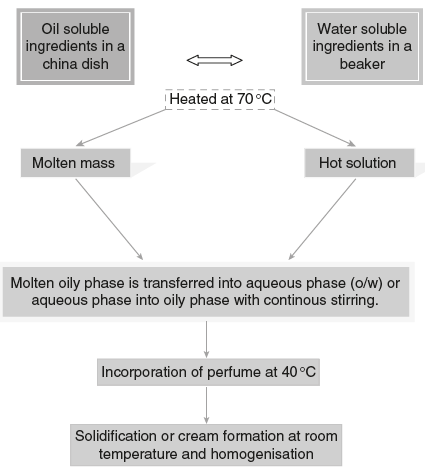
Figure 7.1 Process Flowchart of Cream Manufacture
Tables 7.5 and 7.6 detail the differences between cold and vanishing creams and ointment and cream, respectively.
Table 7.5 Differences between Cold and Vanishing Creams
| Cold Cream | Vanishing Cream |
|---|---|
| 1. It is a w/o semisolid emulsion. | It is an o/w semisolid emulsion. |
| 2. It is meant for cleansing, massaging and moisturizing purposes. | It is used as a foundation cream before applying makeup. |
| 3. It is more oily and greasy in nature. | It is less greasy and oily in nature. |
| 4. It is not readily washable by water. | It is readily soluble in water. |
| 5. There is no need for preservatives. | It requires preservatives. |
| 6. It gives a cooling sensation. | It leaves an immiscible layer. |
| 7. It does not show any pearliness, luster, and shine. | It shows pearliness, luster, and shine, because stearic acid crystals shine on incidence of light. |
| 8. It is nonocclusive. | It is semiocclusive. |
| 9. Humectants are not used. | Humectants are added. |
Table 7.6 Differences between an Ointment and a Cream
| Ointment | Cream |
|---|---|
| 1. Ointment bases are highly hydrophobic and so they are sticky in nature. | Cream is not so sticky |
| 2. It is not readily washable as it is sticky and greasy in nature. | It is readily washable. |
| 3. It does not show prolonged contact at the site of action. | It shows prolonged contact at the site of action. |
| 4. Injured area dries slowly by ointment. | Injured area dries quickly by creams. |
Leave a Reply