A new technique called hybridisation was developed in 1961 by Sol Spiegelman. The concept lying behind this technique is that the ability of the complementary DNA strands to pair with one another can be used to detect similar DNA sequence into two different species or with genome of single species as shown in Figure 5.6.
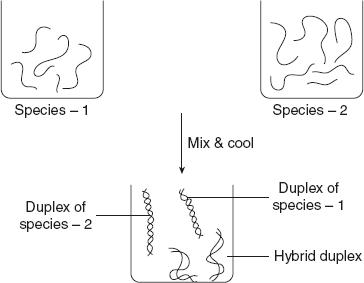
Figure 5.6 Diagrammatic Representation of Hybridisation
If the duplex DNA of human and mouse cells is denatured by heating, then mixed and kept at 65°C for many hours, most of the DNA starts to anneal. Almost all the mouse DNA strands anneal with complementary mouse DNA strands and the human DNA strands anneal with complementary human DNA strands. However, some strands of the human DNA will also anneal those of the mouse DNA to form hybrid duplexes. This explains the fact that different organisms have some common evolutionary heritage; they also have some proteins and RNAs with the same functions and often similar structures. Hybridisation techniques can be used to detect a specific RNA rather than DNA. The isolation and identification of specific genes and RNAs relies on these techniques, and new applications are making it possible to accurately identify an individual on the basis of a crime or predict the onset of some diseases in an individual before symptoms appear.
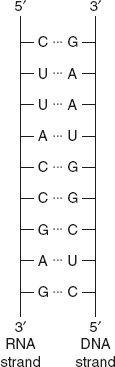
An RNA–DNA hybrid can be formed if RNA and DNA have complementary sequences.
Leave a Reply