Structure of Lipoproteins
Lipoproteins are produced when proteins combine with lipids such as phospholipids, lecithin, cephalin, fatty acid, cholesterol, glycerides, and fat-soluble vitamins Figure 4.5.
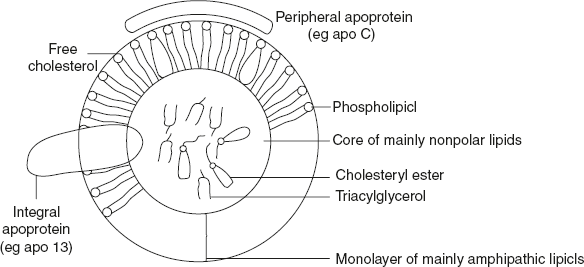
Figure 4.5 Structure of Lipoprotein
The density of lipoproteins is lower than that of proteins because of their combination with lipids. Because of this property, the different fractions of lipoprotein can be identified by ultracentrifugation due to different density of each fraction. Figure 4.6 shows the electrophoretic separation of plasma lipoproteins.
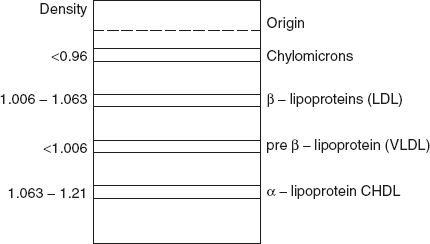
Figure 4.6 Electrophoretic separation of plasma lipoproteins.
Lipoproteins are widely distributed in the body tissues. The various sites of distribution are cell membrane and certain internal structures of cells such as nucleus, mitochondria, and microsomes.
Egg yolk contains two lipoproteins known as lipovitellin α and lipovitellin β. The film that stabilises the fat droplets in milk contains lipoprotein.
The rhodopsin or visual purple is a combination of protein opsin and retinene aldehyde of vitamin A.
Blood lipoproteins are present in plasma. The lipid fraction consists mainly of cholesterol, phospholipids, triglycerides traces of fat-soluble vitamins, and steroid hormones.
Leave a Reply