The abundance of RNA n the cytoplasm and its role in protein synthesis suggested that the genetic information of nuclear DNA is transmitted to an RNA which functions at the sites of protein synthesis. In 1961, the two Nobel laureates Francois Jacob and Jacques Monod postulated that control of protein formation, at least in certain microorganisms, is determined by the rate of synthesis of templates. This requires that the templates do not accumulate in contrast to the constant presence of DNA, rRNA, and tRNA. They proposed that the messenger should have the following properties:
The mRNA is a polynucleotide. The base composition of the messenger shows the base composition of the DNA that codes for it. The mRNA is heterogeneous in size and the molecular weight of an mRNA will be at least half million.
It is associated with ribosomes for a short period and should be synthesised and degraded very rapidly.
Messenger RNA is the most heterogeneous in size and stability among all the types of RNAs. It has large molecular weight approaching 2 × 10⁶ and amounts to about 5% of the total RNA of a cell. It synthesised on the surface of DNA template. Thus, it has base sequence complementary to DNA and carries genetic information or message for the assembly of amino acids from DNA to ribosomes, the site of protein synthesis. In prokaryotic cells, mRNA is metabolically unstable with a high turnover rate, whereas it is rather stable in eukaryotic. It is synthesised by DNA-dependent RNA polymerase.
On account of its heterogeneity, mRNA varies greatly in chain length. Since a few proteins contain less than hundred amino acids, the mRNA coding for these proteins must have at least 100 × 3 or 300 nucleotides residues. In E.coli, the average size of mRNA is 900 to 1,500 nucleotides units.
If mRNA carries the codes for the synthesis of simple protein molecule, it is called monocistronic type, and if it has codes for more than one kind of protein, it is known as polycistronic types as in E.coli.
mRNAs are unstable in the bacterial systems with a half life from a few seconds to about two minutes. In mammalian systems, however, mRNA molecules are more stable with a half life ranging from a few hours to one day.
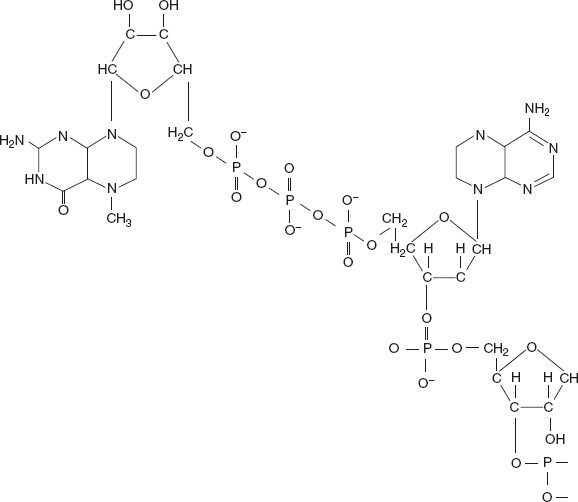
mRNAs are single strands and complementary to the sense strand of their respective structural genes. The mRNA molecules, especially those of mammals, have some peculiar characteristics. The 5′ end of mRNA is capped by a 7-methylguanosine tri-phosphate, which is linked to an adjacent 2′-0-methylribonucleoside as it’s 5′-hydroxyl through the three phosphates. Yet the function of this capping of mRNA is to protect the mRNA from the digestion of ribonuclease. The translation of mRNA into proteins begins at the capped 5′ end. In most mRNAs, the other end, that is, the 3′ OH end, has a polymer of 20–250 nucleotides in length. The specific function of the poly A tail at the 3′ hydroxyl end of mRNA is also avoided from the digestion of enzyme. It probably serves to maintain the intracellular stability of the specific mRNA.
Leave a Reply