Bark extracts are reportedly associated with spasmogenic, oxytocic, uterotonic, anti-bacterial, anti-implantation, anti-tumor, anti-progestational, and antiestrogenic activity. They also have a stimulatory effect on the endometrium and the ovarian tissue.
Alcoholic extract of the bark is found to be oxytocic, enhancing the frequency and duration of uterine contractions unlike tonic contractions due to ergot alkaloids.
Extracts of different parts of asoka are found to be antibacterial, anti fungal, anti diabetic, and CNS depressant. Flower extracts have shown anti-cancer activity.
Marketed preparations
Traditional—ashokarista, asokaghrita
Proprietary—Evecare, Menosan, Lucogyl.
Tulsi
Refers to Ocimum sanctum Linn. Family: Labiatae
Synonym
O. hirsutum, O. album, O. tometosum, O. viride, O. inodorum, O. monachorum, O. nelsonii, O. vergatum, O. tenuiflorum, O. flexuosum, O. frutescens, Machosma tenuiflorum (L) Heynhold.
The herbaceous annual is found throughout India and parts of north and eastern Africa, Hainan island, Taiwan, and China. Most sacred of all medicinal plants in India, Tulsi is an integral part of all traditional and religious rituals in India. It is cultivated and grown as a pot herb in almost every Hindu household. Two varieties of Tulsi are known—green leaved one called Sri or Vishnu tulasi is more common than the purple leaved Krishna tulasi.
Common vernacular names
English: Sacred basil, holy basil
Sanskrit: Vishnupriya, Tulsi
Hindi: Kala-tulsi, baranda
Tamil: Karuttulasi, tulasi
Telugu: Tulasi
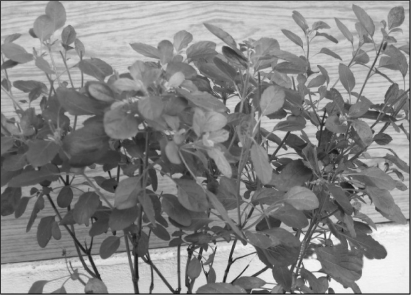
Figure 9.9 Ocimum sanctum – Sri Tulasi

Figure 9.10 Ocimum sanctum – Krishna Tulasi
Morphology
It is an erect, much branched softly pubescent undershrub growing to a height of about 1 m. Leaves are simple, opposite, oblong, minutely glanded, 2–8 cm long, 1–3 cm wide with an acute apex and rounded base. Petioles are hairy. Whole herb has an aromatic characteristic taste and a slightly pungent aromatic taste.
Chemical constituents
The plant is reported to contain tannins (4.6%), essential oil (0.4–0.8%)—composed of eugenol (62%), methyl eugenol, α & β – caryophyllene, bornyl acetate, neral, methyl chavicol, linalool and 1,8-Cineole. Composition of the essential oil varies according to geographical distribution and variety. Leaves also contain ursolic acid, campesterol, cholesterol, stigmasterol, β-sitosterol, and β-carotene.
Traditional uses
Ancient knowledge of its diverse medicinal virtues was possibly the reason for its inclusion in all religious and traditional rituals to medicate water. The plant is a bitter, acrid, aromatic, stomachic, demulcent, diaphoretic, expectorant, febrifuge, vermifuge, and digestive. Leaf infusion is given as a stomachic in gastric disorders in children. Root decoction is used as a diaphoretic in malaria and seeds are used in urinary tract infections. It is used in the treatment of arthritis, bronchitis, common cold, diabetes, fever, influenza, peptic ulcer, and rheumatism. It is also indicated in cardiopathy, leucoderma, asthma, vomiting, lumbago, genito-urinary disorders, and ringworm and skin diseases.
Leave a Reply