V. alternifolia, V. excelsa, Poir, V. sylvestris Grosch, V. edulis, V. flaurei Briquet (Japanese valerian). About 200 species of valerian are known of which only a few are used medicinally. Valerian officinalis includes an extremely polymorphous group of polyploid subspecies having closely similar morphological characteristics. Natural populations of various species and subspecies (V. officinalis ssp. collina, ssp. sambucifolia etc) are found distributed throughout temperate and sub polar Eurasian zones in Belgium, China, France, Netherlands, Nepal, India, and South West Asia. Dilpoid, tetraploid, and octaploid types are cultivated as a medicinal plant in several European countries and in the United States.
Twelve species of Valerian are found in India of which V. wallichii DC (Syn: V. jatamansi Jones) and V. hardwickii are recorded as Indian Valerian. These species are found in the alpine Himalayas.
Nardostachys jatamansii is a related Indian species and an ancient reputed ayurvedic drug of Indo-Greek trade. Used interchangeably with European valerian, the essential oil of this drug is much more agreeable in taste and odor and has been much prized in perfumery world over for its woody aromatic odor.
Common vernacular names
English: Cat’s valerian, Garden heliotrope
Sanskrit: Tagara, Kalanusari
Hindi: Mushkbala, sugandhabala, taga-manthoda
Tamil: Grandhi tagarai
Telugu: Tagaramu
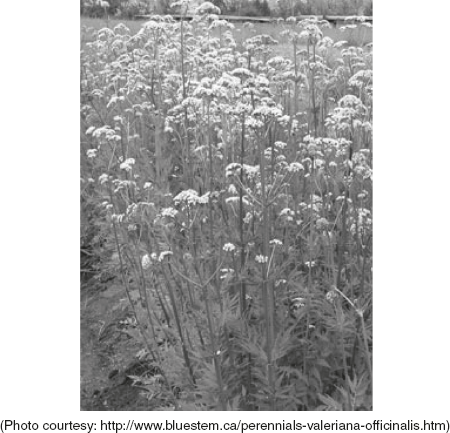
Figure 9.11 Valeriana wallichii
Leave a Reply