Parenteral nutrition is the infusion of enough basic nutrients to achieve active tissue synthesis and growth. It is characterized by the long-term intravenous feeding of protein solutions containing high concentrations of dextrose (approximately 20%), electrolytes, vitamins and in some instances insulin.
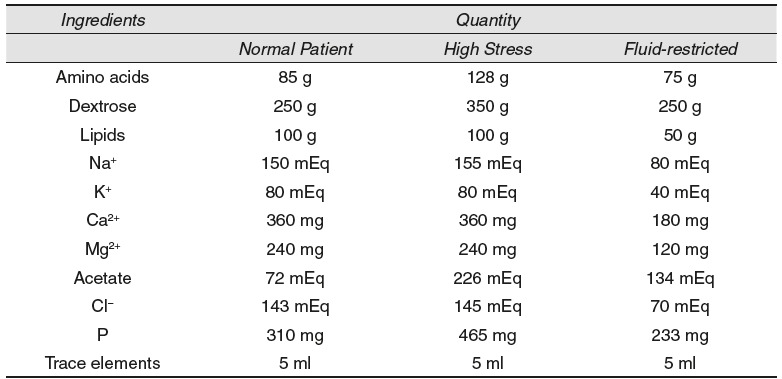
Table 8.3 provides the composition of total parenteral nutrition.
Table 8.3 Composition of Total Parenteral Nutrition
The following are the salient features of parenteral nutrition:
- The individual components and amounts vary with the patient’s needs.
- The large proportion of dextrose increases the calorific value of the solution while keeping the volume required to be administered to a minimum.
- The solution is administered slowly through a large vein, such as the superior vena cava. This permits rapid dilution of the concentrated hyperalimentation fluid and minimizes the risk of tissue or cellular damage due to the hypertonicity of the solution.
- Calcium usually as calcium gluconate and phosphate with potassium or sodium phosphate are frequently present in parenteral admixtures. They tend to form precipitates because of concentration of the individual ions, salt form of the calcium, concentration and type of amino acids, concentration of the dextrose, temperature and pH, presence of other additives, and the order of mixing. Hence the methods of manufacture and storage conditions should be optimized.
Leave a Reply